The capital of Ireland, Dublin, is very much attached to its own history and literature. Dublin's literary tradition is so special that the city has been designated a UNESCO City of Literature. In addition to the various libraries, theatres and bookstores where literature is celebrated every day, a lot revolves around the famous writers of the past. Four of them have received Nobel Prizes, including W.B. Yeats.
When you visit the city, you will find traces of the writers everywhere. A complex overview of the work and life of Dublin writers can be gained at the Dublin Writers Museum. Opened in 1991, it houses permanent exhibitions, such as the first edition of "Gulliver's Travels" by Jonathan Swift or Samuel Beckett's telephone and various manuscripts and photographs of Dublin's great writers. The most important piece is the first edition of "Ulysses" by James Joyce from 1922.
James Joyce, the city's most famous son, has set two monuments to his hometown with his collection of short stories "Dubliners" and the novel "Ulysses". And the city is returning the favour by commemorating him in two museums.
The James Joyce Centre is located just a few minutes from Eccles Street in the centre of Dublin - where Leopold Bloom, the hero of "Ulysses", is said to have begun his journey through the city on 16 June. The villa, dating from 1784, houses an extensive library, photographs, paintings and exhibition rooms on the work and life of the famous Irish poet.
The James Joyce Museum is located in Sandycove, almost twelve kilometres from Dublin.
On June 16, Bloomsday, the whole city celebrates the author and his novel of the century "Ulysses". The paths of Leopold Bloom and scenes from the novel are re-enacted, interpreted and discussed. Signs are then found all over the city that provide information about which scene from "Ulysses" is set exactly here and when Leopold Bloom stayed at that place. The setting of the book is the demimonde of the night, taverns and brothels.
Dublin's dark side is embodied by another Dublin writer: Abraham Stoker, whose "Dracula" is the best-selling book in the world after the Bible.
The house where Oscar Wilde spent his childhood is diagonally opposite the beautiful little Merrion Square Park, where the dandy casually smiles down at the viewer as a monument. Just around the corner, at Merrion Square No. 82, is the home of William Butler Yeats and about 50 meters further on, at Upper Synge Street No. 23, is the birthplace of George Bernard Shaw.
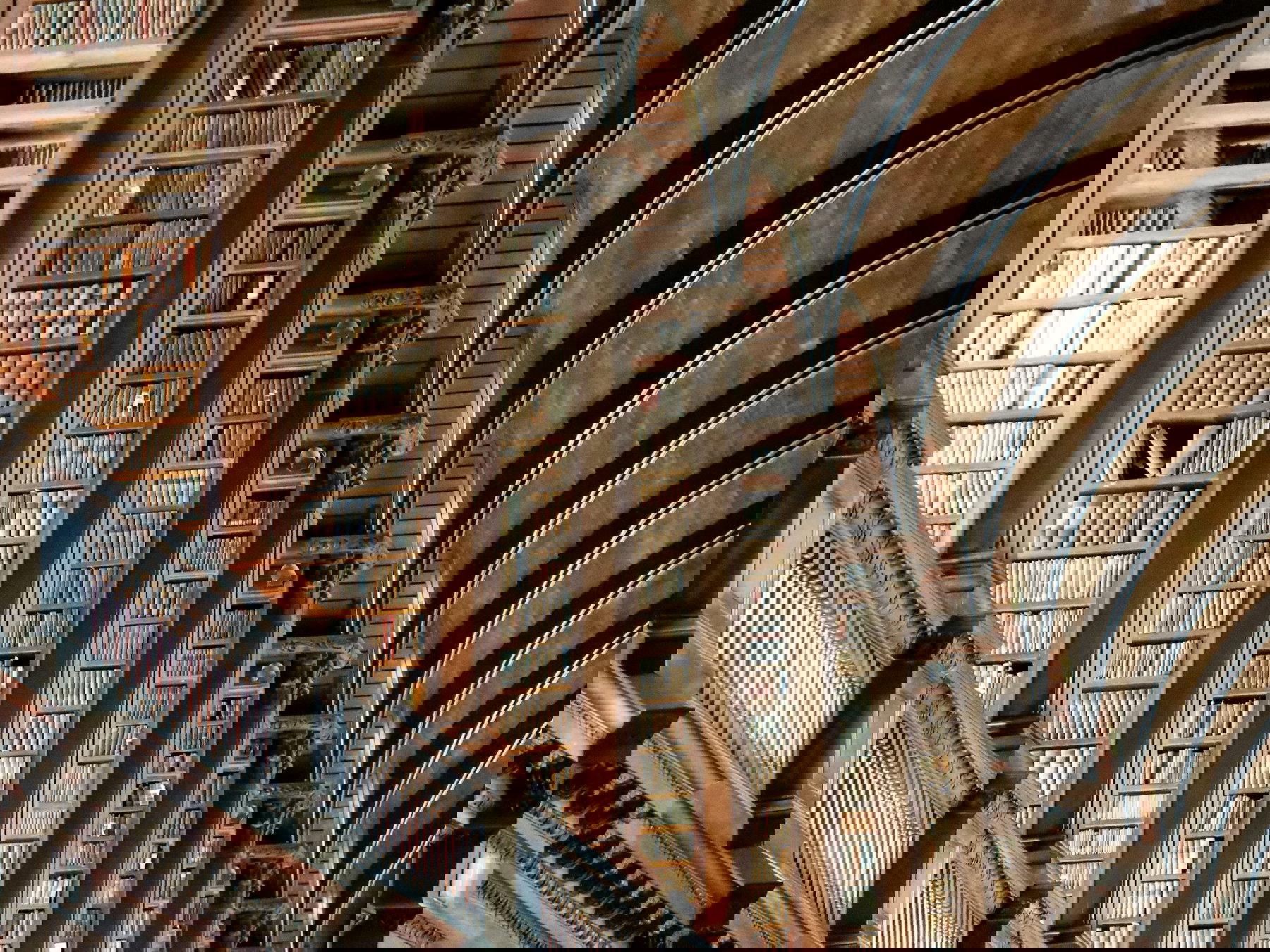
Dublin is also home to Trinity College, founded by Queen Elizabeth I in 1592, where Beckett, Wilde and Abraham "Bram" Stoker were among the students. In the Old Library, built in 1732, you will find the "Long Room".
The Old Library's room, which is actually quite long at 65 metres, contains 48 marble busts of well-known and important personalities of the country, one of the last copies of the Proclamation of the Irish Republic and the oldest harp in the country.
And of course, books are also kept in this library, there are about 200.000 titles, whereby with the "Book of Kells" the most valuable work of Irish book illumination is also kept. Every three months the pages of the book, which was created around 800, are turned over, and the splendour of the presentation of the four Gospels in bright colours, unique for the book art of the time, is still incredible today.
But Dublin would only be a beautiful city with quite good writers, if there weren't the approximately 800 pubs and bars, where of course the "poet drinkers" have gathered. And also with Guinness and Whiskey you don't have to do without literature in Ireland.
A must in Dublin is therefore a "Literary Pub Crawl", in which young actors and their guests go to some pubs to perform passages from the works of Irish poets past and present at suitable locations, of which there are more than enough in Dublin.