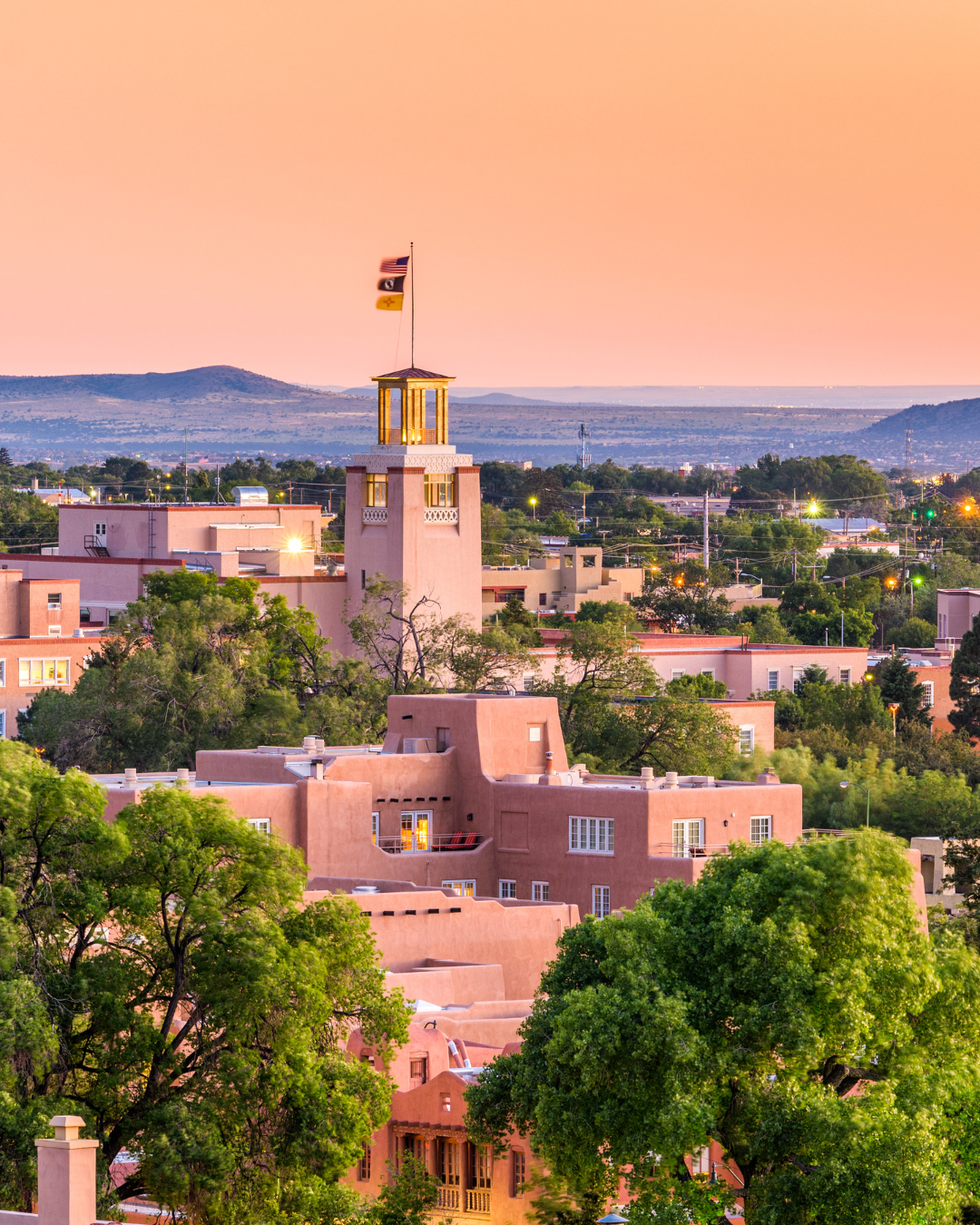
Santa Fe, the capital of New Mexico, is celebrated for its Pueblo-style architecture, vibrant arts scene and rich Native American heritage. Nestled in the foothills of the Sangre de Cristo Mountains, the city is a haven for artists, history buffs, and foodies alike. With numerous museums, including the famous Georgia O'Keeffe Museum, Santa Fe pays homage to its Native American roots and Spanish colonial past through art, culture and architecture. The city's unique blend of cultures is also reflected in its world-renowned cuisine, which can be enjoyed at the many restaurants that dot its picturesque streets. Outdoor enthusiasts will also find plenty to explore, from nearby hiking trails to the scenic beauty surrounding this historic city.
Good to Know:
- Getting There: Santa Fe is served by the Santa Fe Municipal Airport, with direct flights from major cities such as Dallas and Denver. The Albuquerque International Sunport, about an hour away, offers more extensive domestic and international service. Driving or taking a shuttle from Albuquerque is a common way to get to Santa Fe.
- Getting Around: Santa Fe's historic downtown is compact and ideal for exploring on foot. Renting a car is recommended for more distant destinations. Santa Fe also offers public transportation, including buses and commuter rail service to Albuquerque.
- Where to Stay: Santa Fe offers a range of accommodations, from luxury resorts and boutique hotels to charming bed and breakfasts in the historic districts. Staying downtown puts you within walking distance of museums, galleries, and restaurants, allowing you to immerse yourself in the city's culture.
- How Long to Visit: Three to four days in Santa Fe allows for a comprehensive exploration of the city's main attractions, including significant time spent in its renowned museums and galleries and enjoying the local culinary scene. A longer stay offers the opportunity to explore the surrounding area's natural beauty or delve deeper into the city's rich history.
- When to Visit: The best time to visit Santa Fe is in the fall (September through November), when the weather is pleasantly cool, and the aspen trees turn a stunning golden yellow. The summer months (June through August) offer warm days that are ideal for outdoor activities but can be busier.
- Similar Destinations: Travelers who enjoy the cultural richness and artistic vibe of Santa Fe may also enjoy Taos, New Mexico, with its strong Native American and artistic communities set against a stunning natural backdrop. Internationally, San Miguel de Allende, Mexico, offers a similarly enchanting experience with its colonial architecture, thriving arts scene, and rich cultural traditions.
Highlights:
Santa Fe Plaza & Downtown:
The heart of Santa Fe, the historic Plaza, has been the center of city life for centuries. Surrounded by adobe landmarks, it is home to Native American and Spanish markets that offer a vivid display of New Mexico's diverse cultures through crafts and performances. Nearby, the Governor's Palace documents the state's complex history, while the Cathedral Basilica of St. Francis of Assisi is a testament to the enduring faith of its people. Downtown, with its winding streets and hidden courtyards, is perfect for exploring boutique shops and art galleries and enjoying the culinary delights of New Mexican cuisine. The blend of Native American and Spanish influences is palpable, giving visitors a unique cultural experience. In the evening, downtown comes alive with music and nightlife set against the city's historic architectural backdrop.
Art along Canyon Road:
A stroll down Canyon Road is a journey through one of the most concentrated art markets in the world. This half-mile stretch is lined with galleries showcasing a fantastic array of art, from traditional Native American pottery and textiles to contemporary sculptures and paintings. Artists and art lovers alike are drawn to this famous street for inspiration and the opportunity to interact directly with gallery owners and artists in their studios. The vibrant atmosphere and scenic beauty of Canyon Road make it a must-see for anyone looking to experience the artistic soul of Santa Fe.
El Rancho de las Golondrinas:
Located just south of Santa Fe, El Rancho de las Golondrinas is a living history museum that takes visitors back to 18th and 19th-century New Mexico life. Set on 200 scenic acres, this historic ranch features original colonial buildings and reconstructed sites where costumed guides demonstrate traditional crafts and farming techniques. Seasonal festivals and workshops offer a hands-on experience of colonial New Mexico culture, from weaving and blacksmithing to milling and winemaking. It's an immersive journey into the past that offers a unique perspective on the region's history and heritage.
Museum of Indian Arts & Culture:
Located on Museum Hill in Santa Fe, the Museum of Indian Arts & Culture features an incredible collection of Native American art and artifacts, emphasizing the Pueblo peoples of the Southwest. The museum's exhibits detail the rich cultural traditions and history of Native American communities from ancient times to the present. Through pottery, textiles, jewelry, and various sacred and ceremonial objects, visitors gain insight into these communities' creativity, spirituality, and resilience. Educational programs and special events enrich the experience, making the museum a key destination for understanding New Mexico's indigenous heritage.
Museum of International Folk Art:
Located on Santa Fe's Museum Hill, the Museum of International Folk Art houses the world's most extensive collection of folk art, with over 150,000 artifacts from more than 100 countries. The museum's dynamic exhibitions showcase a dazzling array of traditional crafts, including textiles, pottery, puppets, and carvings, celebrating the diversity and commonality of human expression across cultures. You can explore galleries filled with colorful and intricate pieces that tell stories of daily life, spiritual beliefs, and cultural celebrations from around the world. Engaging and educational, the museum offers a unique window into the world's rich folk art traditions, providing inspiration and insight into the creativity that unites us all.

 Lambus


